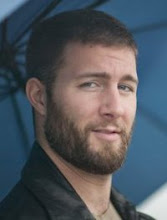
I announced Trism 2 this past week. It'll be for the iPhone, iPod touch, and iPad. I posted a short teaser video on YouTube recently. First screenshots and things will arrive soon...
Trism 2 Announcement
Saturday, February 13, 2010

Wednesday, October 7, 2009
One Year and Counting
There was an article printed in Newsweek today about the iPhone goldrush. In it, one particular paragraph caught my eye. It's about how Ethan Nicholas (creator of the independent hit iShoot) is nervous, wondering whether his new game will be a hit or not. To be honest he's got a good shot as being a one-hit wonder on the AppStore. We all do. He was a parttime hobbyist developer, thrown into the limelight of professional game development, expected to produce hits rivaling game industry veterans. On top of that, the media frenzy surrounding this shift in the game industry has probably taken its toll on him. What was probably a very personal, private part of his life has suddenly become a very public, celebrated thing.
Sure, this is good overall, but after living through this myself I can see now why some people seem to *want* to become one-hit-wonders. I never understood why some celebrities run and hide from fans and press; now I do. I never understood why some authors bomb intentionally on their second book; now I do. I never understood why some musicians authors produce a followup that is so arty, progressive, and intentionally unapproachable; now I do.
To be honest I empathize with Ethan. I empathize with the guy a lot. It's hard to get approached by an Apple rep and be told "Why haven't you put out anything new?". To be honest, I've had game ideas that have been upwards of 75% complete, but I've canned them because I felt they weren't a worthy followup to Trism. Every single time I abort a project, I feel like it's a baby I've given up. They'll come up in my thoughts from time to time, and I wonder what it could have been like to finish it, but putting feelings like this aside is one of the many things I've learned to do in the past year. It's been exactly a year since I quit my dayjob, and life is a lot more complicated now in a variety of ways I'd never imagined.
Life could be a lot worse. I don't really need to be releasing a game every month in order to sustain my business. I figure there are already quite a few apps on the AppStore already following this model -- does Apple really need me to create a new Sudoku? I am working on a few things right now with some very talented folks. They're games and apps based around ideas people have never seen before, because frankly that's really the only kind of thing I'm interested in doing with my life at this point. The cultivation of these ideas take time, and I feel like I'm in the unique position of being able to take my time and do things right.
I just want to try to put out unique, quality products that I can be proud of and will be worth your time. When I tell people I trust about my ideas, their eyes light up. That means everything to me! Focusing on this passion, finding my "eye", moving into this new phase in my destiny... it's been difficult with all the attention. I'd be lying if I claimed to have all the answers... but I feel I'm getting there.
It's taken a lot of time and energy to get to the point where I'm able to confidently answer people when my next game's due. I take a minute to look them in the eye and say "Soon" with a smile. I hope Ethan can find this same peace of mind, he deserves it.
Sure, this is good overall, but after living through this myself I can see now why some people seem to *want* to become one-hit-wonders. I never understood why some celebrities run and hide from fans and press; now I do. I never understood why some authors bomb intentionally on their second book; now I do. I never understood why some musicians authors produce a followup that is so arty, progressive, and intentionally unapproachable; now I do.
To be honest I empathize with Ethan. I empathize with the guy a lot. It's hard to get approached by an Apple rep and be told "Why haven't you put out anything new?". To be honest, I've had game ideas that have been upwards of 75% complete, but I've canned them because I felt they weren't a worthy followup to Trism. Every single time I abort a project, I feel like it's a baby I've given up. They'll come up in my thoughts from time to time, and I wonder what it could have been like to finish it, but putting feelings like this aside is one of the many things I've learned to do in the past year. It's been exactly a year since I quit my dayjob, and life is a lot more complicated now in a variety of ways I'd never imagined.
Life could be a lot worse. I don't really need to be releasing a game every month in order to sustain my business. I figure there are already quite a few apps on the AppStore already following this model -- does Apple really need me to create a new Sudoku? I am working on a few things right now with some very talented folks. They're games and apps based around ideas people have never seen before, because frankly that's really the only kind of thing I'm interested in doing with my life at this point. The cultivation of these ideas take time, and I feel like I'm in the unique position of being able to take my time and do things right.
I just want to try to put out unique, quality products that I can be proud of and will be worth your time. When I tell people I trust about my ideas, their eyes light up. That means everything to me! Focusing on this passion, finding my "eye", moving into this new phase in my destiny... it's been difficult with all the attention. I'd be lying if I claimed to have all the answers... but I feel I'm getting there.
It's taken a lot of time and energy to get to the point where I'm able to confidently answer people when my next game's due. I take a minute to look them in the eye and say "Soon" with a smile. I hope Ethan can find this same peace of mind, he deserves it.
Saturday, April 18, 2009
OpenFeint
Aurora Feint approached Demiforce about two weeks ago to see if we'd be interested in integrating their OpenFeint system into our current and future lineup of games. Being fellow "iPhone Oldskoolers", I've known and respected this crew since day one, so I figured hey, why not.
We agreed to strike a deal for a cut rate in exchane for promotional services. In other words, I allow Demiforce to be quoted in their press releases, so we all look like one happy family.
They went ahead with the press release Friday April 17, which got picked up by TechCrunch, VentureBeat, and many others. Very happy for them. However as I was reading the TechCrunch article, something caught my eye - the reporter had claimed that Demiforce had given up Onyx in order to adopt OpenFeint. This could not be further from the truth, a we canceled Onyxfor our own reasons, none of which were related to OpenFeint. Aurora Feint had approached us later on, quite a ways after the fact.
In essence, Onyx and OpenFeint are radically different services which cater to different needs. The Aurora Feint crew has been very accomodating thus far in listening to feedback I and others like me have given, and I wish them well in their success
We agreed to strike a deal for a cut rate in exchane for promotional services. In other words, I allow Demiforce to be quoted in their press releases, so we all look like one happy family.
They went ahead with the press release Friday April 17, which got picked up by TechCrunch, VentureBeat, and many others. Very happy for them. However as I was reading the TechCrunch article, something caught my eye - the reporter had claimed that Demiforce had given up Onyx in order to adopt OpenFeint. This could not be further from the truth, a we canceled Onyxfor our own reasons, none of which were related to OpenFeint. Aurora Feint had approached us later on, quite a ways after the fact.
In essence, Onyx and OpenFeint are radically different services which cater to different needs. The Aurora Feint crew has been very accomodating thus far in listening to feedback I and others like me have given, and I wish them well in their success
Wednesday, April 1, 2009
Trism Documentary by Apple
Just wanted to write up a little postmortem on the short documentary Apple showed at the event yesterday. I had a lot of fun doing it and was amazed at all the talent involved.
It started about a month ago I think -- my contact at Apple contacted me one day when I was having lunch with a friend.
"Steve, can you be down at Apple HQ at 1:40? We'd love to talk to you."
"Well... umm... it's 12:30 right now and I just sat down to lunch and Apple is about an hour away from where I'm at in SF. Can't we do 2:00 or 2:30?"
"No, we have to do it at 1:40, we have a twenty minute window and that's the only time we can do it."
"What's this about again?"
"We'll tell you when you get here. Right now all I can say is that we want to talk to you."
I was really interested to see what it was. Or afraid. It was either gonna be some kind of special event they were doing, or maybe I had broken some kind of sacred Apple rule and were there in person to revoke my AppStore status and kick me with an iron boot. So I told my buddy Wallace what I knew, crammed whatever food we could into our mouths, and were on our way down there in three minutes.
After we got there, my contact Linda escorted me to a building on the far side of the campus. After a few minutes, John Geleynse (Director of Technology Evangelism -- basically the guy that wrote the iPhone's Human Interface Guidelines) came out, asked us to come into a room with him. He introduced me around. I was in a small room with maybe 12 other people, including a videoconferencing device which showed a lady on the other end. They told me I should just tell my story of how Trism was made, and that it isn't a test, or an interview, and that I should just feel relazed and calm. So I put on my best poker face and gave it to them from the top. I remembered thinking, man, I've told this story so many times now! It almost feels like I'm talking about another person anymore. After CNN and MSNBC and all that I really thought I had capped off that period in my life anad moved on, but that's a different story.
I talk for about 15 or 20 minutes, and after that, I'm excused. I walk out of the building with my contact, and she gave me a big hug. They loved you, she told me. Great, I said, but now could someone tell me what this was all about? The answer finally came: Apple was considering doing a short documentary on AppStore successes, and wanted to see how my story fits the bill. She then went on to say that I should expect a few phone calls in the next week or so to set up a timetable for the shoot.
I talked with the crew over the phone the next week -- all very nice people. They wanted to get a deeper impression about who I was, and what kind of angle they wanted to capture on film. I met the director, a nice lady named Lilibet, who is on assignment from apple with her film crew from NYC. Appatently they wanted to film the entire thing the following week.
So that next week, they arrive at my doorstep Thursday morning, in what was to be the first of two days of shooting. I don't know what I expected, maybe just one person in a handicam filming me around my place. What ended up happening was totally different -- a crew of 25 in my apartment from sunup to sundown. They gutted my place, effectively turning my living situation into a portable film studio. It was a very cool process to watch -- everyone was totally professional and operated like a well-oiled machine. What was even more interesting though was when I asked one of the grips about his history with them all, and he said he had none -- it was the first time they were all working together. These people knew each of their roles to such a fine-tuned extent that they could simply show up on any given day at any given locaiton and perform what they needed to do without getting in eachothers' way. Truly a sight to see.
The first day of filming was all professional stuff. First thing we covered once all the lighting, audio, and set dressing was set up was the on-camera interview. They put these two big lights called "divas" on me (oh how fitting) which were HOT. And I was talking for about three hours straight. By the end of the second hour, I was so exhausted, dehydrated, and cooked. Following that, we did some footage of me on the computer.
The next day was mostly lifestyle stuff. We started at around 7:30 am and proceeded straight to Lombard street, one of the steepest, windiest roads in San Francisco. It had just stopped raining, but nevertheless, they wanted to see if I could bike up and down it a few times for some establishing shots. I agreed, and OF COURSE I FELL!!! I had road rash all down my left hip. They wanted to get me to the hospital, but I said no, if we end up breaking the shoot I know you guys will never be back (they're from NYC afterall). So we got some gauze from Walgreen's, I bangadged myself up, popped 8 advil, and resumed shooting. All in all that day lasted 14 hours -- we didn't get finished till about 9:45pm.
After we wrapped, I heard things from time to time about post-production, but really it was a done deal. I didn't have a say in the creative process, but I trusted them all to do the right thing. I mean hey, Apple obviously paid top notch people to put this thing on -- I knew my "diva" essence was going to be captured in full.
About a month later, John Geleynse pops up in my email inbox, telling me I'm invited to the iPhone OS 3.0 keynote down at Apple headquarters in Cupertino. I thought it was pretty cool, but naturally, I didn't put two and two together. I showed up early that morning, and John approaches me out of the blue, saying I need to come sit next to him when the presentation starts. Still, of course, I have no idea what's going on (Apple originally told me the video would be initially shown at WWDC, so I had put this all out of my mind). Before long, the lights go down, a speaker goes on, and within a few minutes, he starts talking about my story, and shows the video. I was so blushing! It caught me by sprise and I couldn't help but sit there and laugh as I watched myself onscreen.
All in all though, it was a great experience. Very professional people, wish I could have worked with them longer. Everybody was very accomodating, and I learned a lot about the filmmaking process. And of course, I can't thank Apple enough for the huge opportunity they've given me in being presented as their "AppStore indie posterboy" like this. I'm delighted that I could share in the experience and help make the Apple shine.
Lastly, I wanted to speak a bit about Demiforce's plans. All this attention has put a huge pressure on me to keep on creating hit games, which I fully intend to do -- right now we're deep in development of our next title, which I'm hesitant to say much about except for the fact that it is not a puzzle game. As much as I have enjoyed the media attention so far, I feel that I'll be disasspointed if the only think I'm remembered for is being this posterboy. I'd rather be remembered as a guy who made a solid effort in creating new, fun types of games that constantly push the industry forward. I felt I made a great start with Trism, being the very first puzzle game that used the iPhone's unique features to create a never-before-seen type of gameplay. The bar's been set, let's see where we go from here!
It started about a month ago I think -- my contact at Apple contacted me one day when I was having lunch with a friend.
"Steve, can you be down at Apple HQ at 1:40? We'd love to talk to you."
"Well... umm... it's 12:30 right now and I just sat down to lunch and Apple is about an hour away from where I'm at in SF. Can't we do 2:00 or 2:30?"
"No, we have to do it at 1:40, we have a twenty minute window and that's the only time we can do it."
"What's this about again?"
"We'll tell you when you get here. Right now all I can say is that we want to talk to you."
I was really interested to see what it was. Or afraid. It was either gonna be some kind of special event they were doing, or maybe I had broken some kind of sacred Apple rule and were there in person to revoke my AppStore status and kick me with an iron boot. So I told my buddy Wallace what I knew, crammed whatever food we could into our mouths, and were on our way down there in three minutes.
After we got there, my contact Linda escorted me to a building on the far side of the campus. After a few minutes, John Geleynse (Director of Technology Evangelism -- basically the guy that wrote the iPhone's Human Interface Guidelines) came out, asked us to come into a room with him. He introduced me around. I was in a small room with maybe 12 other people, including a videoconferencing device which showed a lady on the other end. They told me I should just tell my story of how Trism was made, and that it isn't a test, or an interview, and that I should just feel relazed and calm. So I put on my best poker face and gave it to them from the top. I remembered thinking, man, I've told this story so many times now! It almost feels like I'm talking about another person anymore. After CNN and MSNBC and all that I really thought I had capped off that period in my life anad moved on, but that's a different story.
I talk for about 15 or 20 minutes, and after that, I'm excused. I walk out of the building with my contact, and she gave me a big hug. They loved you, she told me. Great, I said, but now could someone tell me what this was all about? The answer finally came: Apple was considering doing a short documentary on AppStore successes, and wanted to see how my story fits the bill. She then went on to say that I should expect a few phone calls in the next week or so to set up a timetable for the shoot.
I talked with the crew over the phone the next week -- all very nice people. They wanted to get a deeper impression about who I was, and what kind of angle they wanted to capture on film. I met the director, a nice lady named Lilibet, who is on assignment from apple with her film crew from NYC. Appatently they wanted to film the entire thing the following week.
So that next week, they arrive at my doorstep Thursday morning, in what was to be the first of two days of shooting. I don't know what I expected, maybe just one person in a handicam filming me around my place. What ended up happening was totally different -- a crew of 25 in my apartment from sunup to sundown. They gutted my place, effectively turning my living situation into a portable film studio. It was a very cool process to watch -- everyone was totally professional and operated like a well-oiled machine. What was even more interesting though was when I asked one of the grips about his history with them all, and he said he had none -- it was the first time they were all working together. These people knew each of their roles to such a fine-tuned extent that they could simply show up on any given day at any given locaiton and perform what they needed to do without getting in eachothers' way. Truly a sight to see.
The first day of filming was all professional stuff. First thing we covered once all the lighting, audio, and set dressing was set up was the on-camera interview. They put these two big lights called "divas" on me (oh how fitting) which were HOT. And I was talking for about three hours straight. By the end of the second hour, I was so exhausted, dehydrated, and cooked. Following that, we did some footage of me on the computer.
The next day was mostly lifestyle stuff. We started at around 7:30 am and proceeded straight to Lombard street, one of the steepest, windiest roads in San Francisco. It had just stopped raining, but nevertheless, they wanted to see if I could bike up and down it a few times for some establishing shots. I agreed, and OF COURSE I FELL!!! I had road rash all down my left hip. They wanted to get me to the hospital, but I said no, if we end up breaking the shoot I know you guys will never be back (they're from NYC afterall). So we got some gauze from Walgreen's, I bangadged myself up, popped 8 advil, and resumed shooting. All in all that day lasted 14 hours -- we didn't get finished till about 9:45pm.
After we wrapped, I heard things from time to time about post-production, but really it was a done deal. I didn't have a say in the creative process, but I trusted them all to do the right thing. I mean hey, Apple obviously paid top notch people to put this thing on -- I knew my "diva" essence was going to be captured in full.
About a month later, John Geleynse pops up in my email inbox, telling me I'm invited to the iPhone OS 3.0 keynote down at Apple headquarters in Cupertino. I thought it was pretty cool, but naturally, I didn't put two and two together. I showed up early that morning, and John approaches me out of the blue, saying I need to come sit next to him when the presentation starts. Still, of course, I have no idea what's going on (Apple originally told me the video would be initially shown at WWDC, so I had put this all out of my mind). Before long, the lights go down, a speaker goes on, and within a few minutes, he starts talking about my story, and shows the video. I was so blushing! It caught me by sprise and I couldn't help but sit there and laugh as I watched myself onscreen.
All in all though, it was a great experience. Very professional people, wish I could have worked with them longer. Everybody was very accomodating, and I learned a lot about the filmmaking process. And of course, I can't thank Apple enough for the huge opportunity they've given me in being presented as their "AppStore indie posterboy" like this. I'm delighted that I could share in the experience and help make the Apple shine.
Lastly, I wanted to speak a bit about Demiforce's plans. All this attention has put a huge pressure on me to keep on creating hit games, which I fully intend to do -- right now we're deep in development of our next title, which I'm hesitant to say much about except for the fact that it is not a puzzle game. As much as I have enjoyed the media attention so far, I feel that I'll be disasspointed if the only think I'm remembered for is being this posterboy. I'd rather be remembered as a guy who made a solid effort in creating new, fun types of games that constantly push the industry forward. I felt I made a great start with Trism, being the very first puzzle game that used the iPhone's unique features to create a never-before-seen type of gameplay. The bar's been set, let's see where we go from here!
Monday, March 2, 2009
Onyx RIP
Dear iPhone Developers:
I'm sorry to say that Demiforce is canceling plans for Onyx.
Apple recently told us they couldn't guarantee Onyx-enabled games would be approvable in the AppStore. They pointed us to certain areas of the terms agreement contract, but declined to elaborate further as to whether or not Onyx would comply with those guidelines. Ultimately, this presented a business risk that neither I nor my potential investors wanted to challenge. Although much of my own time, energy, and money has been poured into getting Onyx off the ground, eventually I backed away from our would-be investors, and threw in the towel.
The blame should lay with me for this. I was the one who failed to acknowledge the grey areas in the Apple contract before starting Onyx. I sent out the initial announcement, getting peoples' hopes up by calling for potential beta testers. I take full responsibility for this, and I apologize to you if you were one of the many people who have been patiently waiting for it. I always intended for Onyx to be for you guys, my peers in the indie developer community, so the pain really hits home when I say it isn't going to happen.
The good news is that there's no shortage of companies out there planning to offer similar services. Over the last few months I've heard of at least six companies planning something like Onyx, one of which being the recently announced "OpenFeint" system by the Aurora Feint crew. These are talented people and I'm sure it'll be a top-notch product. I hope their business model will mesh with Apple's approval system better than Onyx did, and I eagerly wait to see what can be done in this space.
We're going to pick up where we left off with what we know best -- games. I founded Demiforce as an independent games studio, focusing on new and innovative types of games, and that's what it'll remain. We had a great 2008 with our multiple award-winning indie game "Trism", and we can't wait to show you what games we have in store for 2009 and beyond.
Best,
Steve
I'm sorry to say that Demiforce is canceling plans for Onyx.
Apple recently told us they couldn't guarantee Onyx-enabled games would be approvable in the AppStore. They pointed us to certain areas of the terms agreement contract, but declined to elaborate further as to whether or not Onyx would comply with those guidelines. Ultimately, this presented a business risk that neither I nor my potential investors wanted to challenge. Although much of my own time, energy, and money has been poured into getting Onyx off the ground, eventually I backed away from our would-be investors, and threw in the towel.
The blame should lay with me for this. I was the one who failed to acknowledge the grey areas in the Apple contract before starting Onyx. I sent out the initial announcement, getting peoples' hopes up by calling for potential beta testers. I take full responsibility for this, and I apologize to you if you were one of the many people who have been patiently waiting for it. I always intended for Onyx to be for you guys, my peers in the indie developer community, so the pain really hits home when I say it isn't going to happen.
The good news is that there's no shortage of companies out there planning to offer similar services. Over the last few months I've heard of at least six companies planning something like Onyx, one of which being the recently announced "OpenFeint" system by the Aurora Feint crew. These are talented people and I'm sure it'll be a top-notch product. I hope their business model will mesh with Apple's approval system better than Onyx did, and I eagerly wait to see what can be done in this space.
We're going to pick up where we left off with what we know best -- games. I founded Demiforce as an independent games studio, focusing on new and innovative types of games, and that's what it'll remain. We had a great 2008 with our multiple award-winning indie game "Trism", and we can't wait to show you what games we have in store for 2009 and beyond.
Best,
Steve
Sunday, November 23, 2008
Slot machines are the casual games of casinos.
Went up to Tahoe to snowboard this past weekend and stopped in Reno for a night of gambling. We walked in and my buddy Josh instantly hit the slots. I never gave slots things much attention until he started to show me some of them. Slot machines occupy the most square footage in casinos -- certainly they must be doing something right! So I sat down with him and started studying some of his favorites.
They're really fascinating things. It made me realize people have been playing casual games far before any video game was ever around. Studying them certainly gave me a few lessons in the allure of casual gaming.
I'd love to talk more about what I'm considering but it's just too early. I will say this: No, Demiforce is not going to write a slot machine game and NO, I did not play any slots while I was there :) Josh ended up winning big though. Stay tuned...
They're really fascinating things. It made me realize people have been playing casual games far before any video game was ever around. Studying them certainly gave me a few lessons in the allure of casual gaming.
I'd love to talk more about what I'm considering but it's just too early. I will say this: No, Demiforce is not going to write a slot machine game and NO, I did not play any slots while I was there :) Josh ended up winning big though. Stay tuned...
Wednesday, November 19, 2008
i was told to blog about this
Met with angel X this morning for breakfast. had lunch with publisher Y for lunch. speaking at panel Z tonight for dinner.
There, I blogged about it. And I didn't incriminate anybody! Are you on the edge of your seat yet? Ooooh.
There, I blogged about it. And I didn't incriminate anybody! Are you on the edge of your seat yet? Ooooh.
Subscribe to:
Posts (Atom)